- 20 g of whey 49 % higher
- 40 g of whey 56 % higher
Witard et al. 2014 (PMID 24257722), 48 resistance-trained men of about 80 kg. A 10 g dose added no further stimulation. Measured over about 4 hours, so it shows short-term synthesis, not muscle gained over months.
Researchers do not usually measure how much protein you absorb. They measure how fast your muscles build new protein in the hours after a meal. In several studies of young men after weight training, that rate rose with dose up to about 20 g and then levelled off. Newer work disputes that ceiling. A review of the evidence suggests roughly 0.4 g per kg of body weight per meal, which is 30 g for a 75 kg person. That is a reasoned estimate, not a measured cliff.
This article goes through what the studies measured, where they disagree, and how to turn the result into a plan. If you want your daily total first, start with how much protein you need per kg or use the protein calculator.
What “absorb” means in these studies
The studies below measure muscle protein synthesis (MPS), the rate at which muscle builds new protein from amino acids, after a set dose. They do it by infusing a labelled amino acid and taking small muscle biopsies.
That makes the evidence precise but narrow. The 2009 and 2014 studies below used small groups of young men, a single drink of whey or egg protein, and a window of 4 hours. A rate measured over 4 hours is not the same as muscle gained over months.
The 20 g finding
In 2009, Moore and colleagues gave six young men 0, 5, 10, 20 or 40 g of egg protein after a leg workout. Muscle protein synthesis rose with dose and was “maximally stimulated at 20 g” (PMID 19056590). Leucine oxidation, the irreversible breakdown of that amino acid, rose at 20 and 40 g, which the authors read as protein beyond what can be built into tissue.
Witard and colleagues repeated the idea in 48 resistance-trained men of about 80 kg, using whey isolate. Compared with 0 g, muscle protein synthesis was 49% higher with 20 g and 56% higher with 40 g. A 10 g dose added nothing. The authors concluded that 20 g was enough to maximally stimulate synthesis in this group (PMID 24257722). Those two studies are where the “20 to 25 g per meal” rule comes from.
Where that rule runs into trouble
In 2016, Macnaughton and colleagues compared 20 g and 40 g of whey in 30 resistance-trained men after whole-body training. Synthesis averaged 0.059% per hour with 40 g and 0.049% with 20 g (P = 0.005). Lean mass did not change the result between the lighter and heavier groups (PMID 27511985). The larger dose did more, so 20 g was not a ceiling after a whole-body session.
In 2023, Trommelen and colleagues went much further. Ingesting 100 g of protein produced “a greater and more prolonged (>12 h) anabolic response” than 25 g, and amino acid oxidation was barely affected (PMID 38118410). The authors argue that the idea of an upper limit “lacks scientific proof”.
These results do not strictly contradict each other. The 2009 and 2014 studies measured 4 hours, and the 2023 study reported a response lasting beyond 12 hours, so measurement length is one difference. What these abstracts do not show is that the extra synthesis turns into more muscle after months of eating this way, which is the outcome that matters.
Does spreading protein out beat one big meal?
The same lab logic suggests that if each meal has a ceiling, you should split your day into several moderate meals. Two trials tested it.
Areta and colleagues gave 24 trained men 80 g of whey over 12 hours after a workout, in three patterns: eight doses of 10 g, four of 20 g, or two of 40 g. The four-dose pattern gave 31% to 48% more muscle protein synthesis than the other two (PMID 23459753).
Mamerow and colleagues fed 8 adults 3 meals a day for 7 days. In one condition, protein was even (about 31.5, 29.9 and 32.7 g). In the other it was skewed (10.7, 16.0 and 63.4 g). Over 24 hours, synthesis was 0.075% per hour for the even pattern and 0.056% per hour for the skewed pattern (PMID 24477298).
Both are small and short. A 2020 review by Hudson and colleagues looked at longer trials and concluded that the evidence on distribution for muscle outcomes is “limited and inconsistent”, and that the effect of distribution “cannot be sufficiently disentangled from the effect of protein quantity” (PMID 32429355). They also suggest that for adults already eating 0.8 to 1.3 g/kg per day, having at least one meal with enough protein to maximally stimulate synthesis is helpful, however the rest of the day is arranged.
Taken together: even spreading is a low-cost habit with some short-term support, but the long-term evidence that a lopsided day costs you muscle is limited.
A per-kilogram rule instead of a flat number
Schoenfeld and Aragon reviewed the acute and long-term studies in 2018. Their conclusion was to target “0.4 g/kg/meal across a minimum of four meals in order to reach a minimum of 1.6 g/kg/day”. At the upper daily intake of 2.2 g/kg spread over four meals, the maximum is 0.55 g/kg per meal (PMID 29497353). They note that doses above 20 g raise amino acid oxidation, but that not all of the extra amino acids are lost this way.
This is a judgement based on the literature, not an experimental threshold. It does have the advantage of scaling with body size, which a flat “30 g” does not.
Worked example: 75 kg adult who lifts
- Daily target at 1.6 g/kg: 75 × 1.6 = 120 g.
- Per meal at 0.4 g/kg: 75 × 0.4 = 30 g, and 30 × 4 meals = 120 g, matching the daily target.
- Upper end at 2.2 g/kg: 75 × 2.2 = 165 g, and 75 × 0.55 = 41.25 g per meal, which over 4 meals gives 165 g.
So a 75 kg lifter has a per-meal range of about 30 to 41 g.
What 30 g looks like on a plate
Values below are per 100 g from USDA FoodData Central (SR Legacy). Cooked weights are used for cooked foods.
| Food | Protein per 100 g | Amount | Protein |
|---|---|---|---|
| Chicken breast, roasted | 31.0 g | 100 g | 31.0 g |
| Lentils, boiled | 9.02 g | 200 g | 18.0 g |
| Greek yogurt, plain, lowfat | 9.95 g | 125 g | 12.4 g |
| Eggs, hard-boiled | 12.6 g | 3 large (50 g each, 150 g) | 18.9 g |
Three example meals:
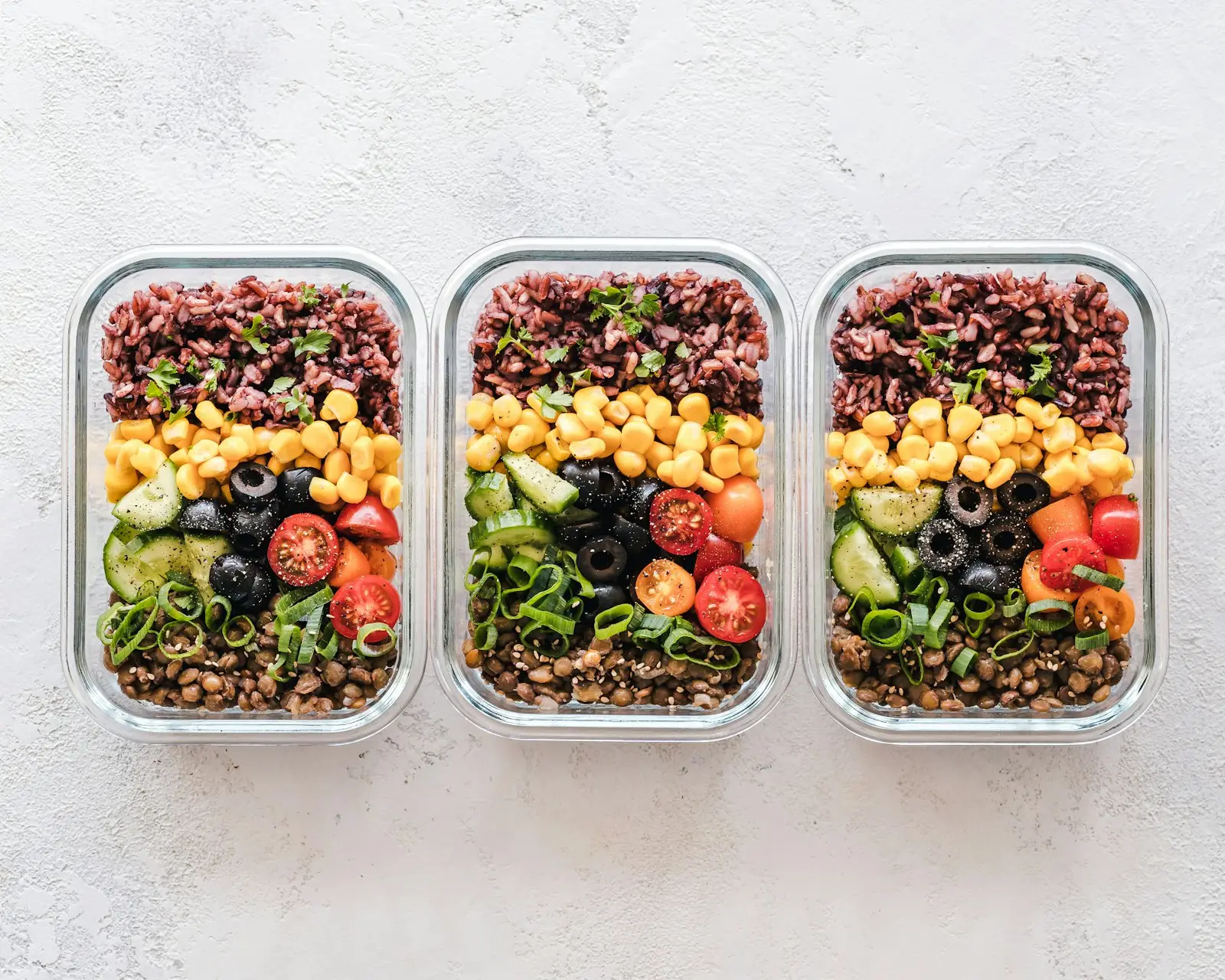
- 100 g roasted chicken breast: 31.0 g.
- 200 g boiled lentils plus 125 g Greek yogurt: 18.04 + 12.44 = 30.5 g.
- 3 hard-boiled eggs plus 100 g Greek yogurt: 18.9 + 9.95 = 28.9 g.
Adding those three meals gives about 90 g. A 75 kg person aiming for 120 g needs about 30 g more from a fourth meal or snack.
One caution on lentils. The 9.02 g figure is for plain boiled lentils. How much protein a serving of dal holds depends on how thick or thin it is, because added water lowers the protein per 100 g. To be sure, weigh the dry lentils you cook and divide by the number of servings you get. For brands of yogurt, check the label, because the value I used is one USDA entry.
Older adults
Moore and colleagues re-analysed data from their own earlier studies in men of about 71 and about 22 years. Muscle protein synthesis plateaued at about 0.40 g/kg per meal in the older men and 0.24 g/kg in the younger men. Per kg of body weight that difference was borderline (p = 0.055), and the older group’s estimate was uncertain (95% confidence interval ±0.19). Per kg of lean mass, where lean mass data were available, the gap was clearer: 0.60 against 0.25 g/kg (p < 0.01). The authors concluded that older men need a larger relative dose in a single meal (PMID 25056502).
For a 75 kg person, the figures translate to 30 g and 18 g. The study included only men, so I would not read the numbers as exact for women.
Limits of all this
- Almost all of the dose-response work is in healthy young men. Evidence in women, and in people with illness, is thinner.
- Isolated whey or egg in a drink absorbs quickly. A mixed meal with fibre, fat and carbohydrate digests more slowly, and Schoenfeld and Aragon argue that slower digestion could make a given dose go further.
- Synthesis rate measured in hours is a proxy. The longer-term evidence that meal spacing changes muscle size is weak.
- Timing around workouts is a separate question; see protein after a workout.
If you have kidney disease, liver disease, or any condition that affects how you should eat protein, follow your doctor’s or dietitian’s advice and not these figures.
What to do with this
- Work out your daily total, for example from the protein calculator or the table of daily protein by body weight.
- Divide by your number of meals. At 1.6 g/kg over four meals, each is 0.4 g/kg.
- If one meal comes out much larger or smaller, that is not a failure. The review above found the long-term evidence for a penalty limited and inconsistent.
This article is for general information and is not medical advice. Speak with a doctor or registered dietitian about your own situation.
References
- Schoenfeld BJ, Aragon AA. How much protein can the body use in a single meal for muscle-building? Implications for daily protein distribution. J Int Soc Sports Nutr. 2018. PMID 29497353.
- Moore DR, Robinson MJ, Fry JL, et al. Ingested protein dose response of muscle and albumin protein synthesis after resistance exercise in young men. Am J Clin Nutr. 2009. PMID 19056590.
- Witard OC, Jackman SR, Breen L, et al. Myofibrillar muscle protein synthesis rates subsequent to a meal in response to increasing doses of whey protein at rest and after resistance exercise. Am J Clin Nutr. 2014. PMID 24257722.
- Macnaughton LS, Wardle SL, Witard OC, et al. The response of muscle protein synthesis following whole-body resistance exercise is greater following 40 g than 20 g of ingested whey protein. Physiol Rep. 2016. PMID 27511985.
- Trommelen J, van Lieshout GAA, Nyakayiru J, et al. The anabolic response to protein ingestion during recovery from exercise has no upper limit in magnitude and duration in vivo in humans. Cell Rep Med. 2023. PMID 38118410.
- Areta JL, Burke LM, Ross ML, et al. Timing and distribution of protein ingestion during prolonged recovery from resistance exercise alters myofibrillar protein synthesis. J Physiol. 2013. PMID 23459753.
- Mamerow MM, Mettler JA, English KL, et al. Dietary protein distribution positively influences 24-h muscle protein synthesis in healthy adults. J Nutr. 2014. PMID 24477298.
- Moore DR, Churchward-Venne TA, Witard O, et al. Protein ingestion to stimulate myofibrillar protein synthesis requires greater relative protein intakes in healthy older versus younger men. J Gerontol A Biol Sci Med Sci. 2015. PMID 25056502.
- Hudson JL, Bergia RE, Campbell WW. Protein distribution and muscle-related outcomes: does the evidence support the concept? Nutrients. 2020. PMID 32429355.
- U.S. Department of Agriculture. FoodData Central, SR Legacy entries 173424, 171477, 172421 and 170903.